 DriveCircle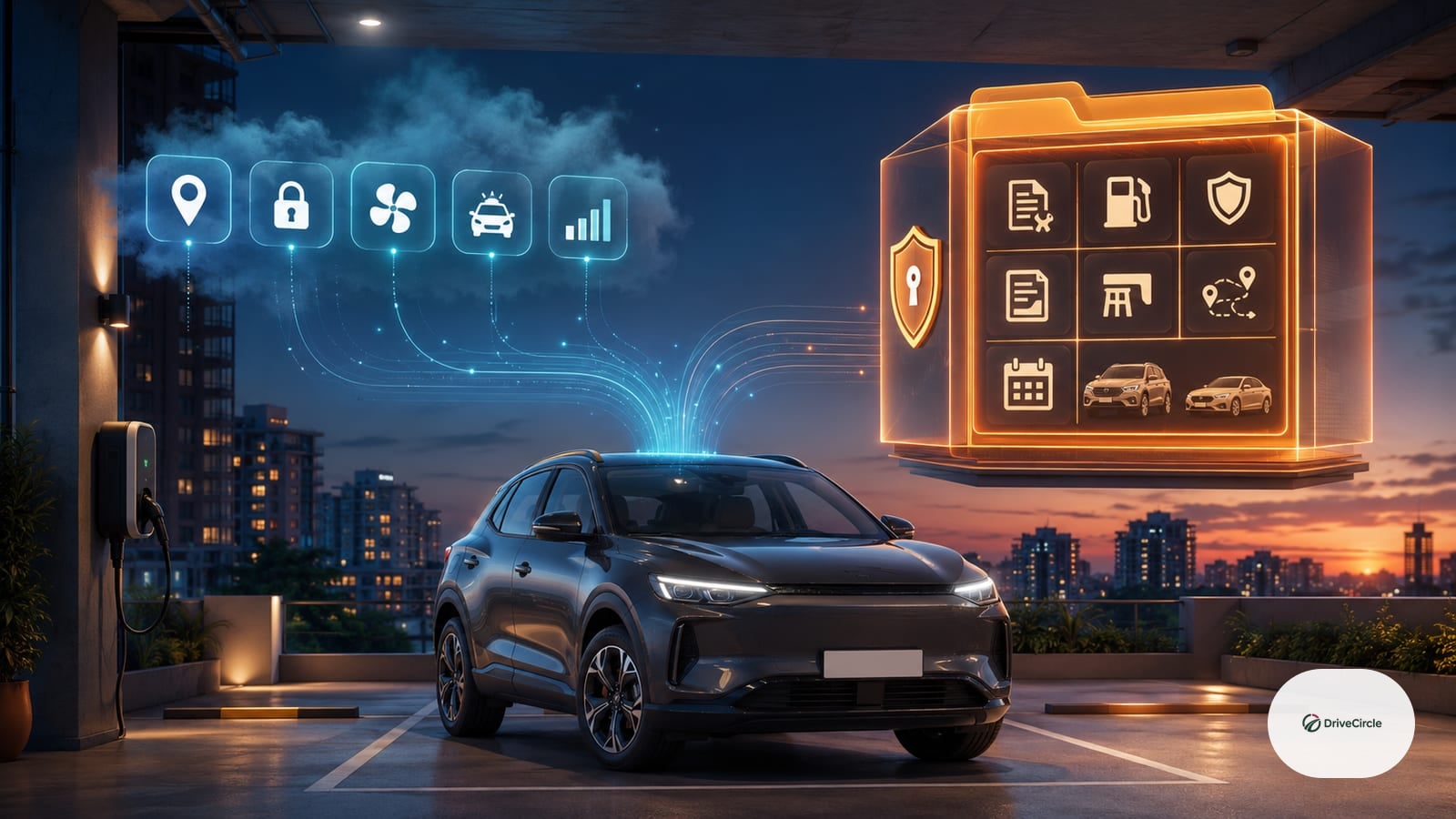
Connected cars are becoming normal in India. Many new cars now offer app-based status, location, remote commands, alerts, vehicle health information, and connected infotainment. This is useful, but it creates a new question: where should the owner's long-term vehicle history live?
Real owner experience shows the gap clearly. Companion apps are genuinely useful for some things — checking allocation/delivery status, verifying a chassis number is real before accepting delivery — but owners consistently report rough edges too: warranty status displaying incorrectly inside the app, security or live-camera features not working as advertised at launch, settings that quietly reset after every restart, and features listed in the manual that simply aren't live in the software yet. None of this is unusual for a first-year connected feature set — but it means the app is not yet a reliable single source of truth for your ownership record.
Brand apps are also, by definition, tied to one manufacturer. They don't help a family that owns cars from different brands, and they focus on features from the vehicle rather than the complete ownership picture: fuel bills, tolls, service invoices, insurance notes, road-trip plans, favorite stops, and community recommendations.
What Connected Apps Do Well
- Vehicle status and alerts
- Location and remote access
- Delivery/allocation verification before you accept the car
- Manufacturer-issued service reminders
What Owner-Controlled Records Still Need to Cover
- Invoices and service notes, independent of any one manufacturer's app
- Fuel and charging history
- Trip expenses and route learnings
- Insurance and document timeline
- Multi-brand garage history
Connected cars are the future, but owner-controlled context is just as important, especially while the manufacturer app itself is still working out its own early-days rough edges. DriveCircle is the layer that stays consistent regardless of which brand's app has a good year and which doesn't.