 DriveCircle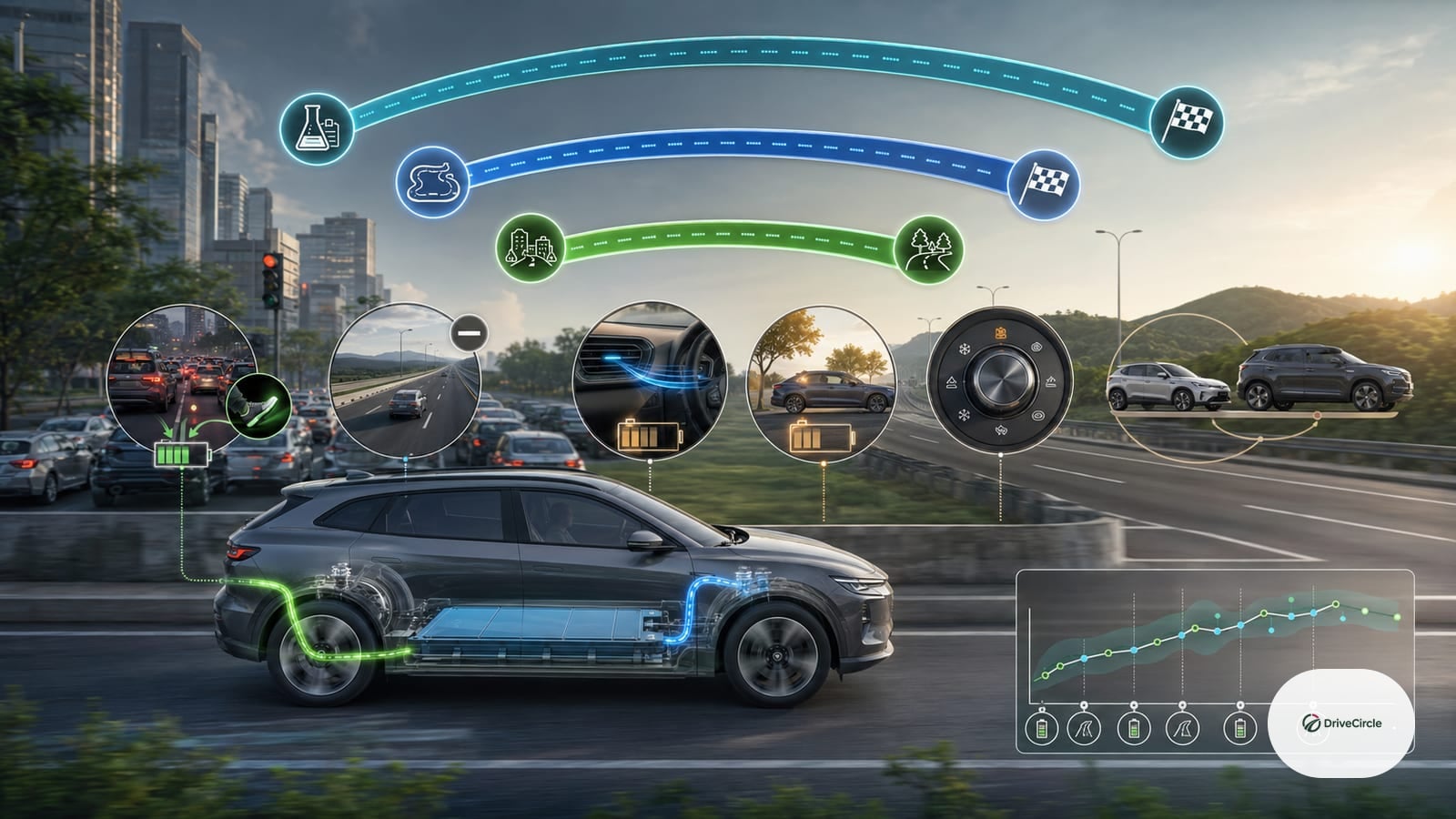
Every EV has three numbers attached to it: the ARAI-certified range, the manufacturer's own real-world test figure, and what owners actually see once the car is theirs. In community reporting, those three numbers can differ by more than 100 kilometres on the same vehicle — not because any of them is wrong, but because they're measuring different things.
Owner-logged efficiency for larger electric SUVs with big battery packs clusters around 6-6.5 km/kWh in mixed real-world driving, noticeably below both the certified figure and even the manufacturer's own in-house test average. Smaller, lighter EVs report better efficiency in the 7-7.5 km/kWh range. Driving mode matters more than most owners expect going in: a "default" driving mode has been reported to deliver better range than a dedicated "range" mode in some cases, and cruise control — convenient as it is — disables regenerative braking, measurably reducing range on a cruise-heavy highway run compared to mixed driving with more regen.
One-pedal driving (leaning on regenerative braking rather than the physical brake) is specifically called out by owners as genuinely useful in stop-start city traffic, both for range and for reduced brake wear.
What Actually Changes Your Real Range
- Driving mode — "default" can outperform a dedicated range/eco mode depending on the vehicle.
- Cruise control usage — it disables regenerative braking, costing you range on long, steady-speed highway stretches.
- AC load, especially idling with AC running for extended stops.
- One-pedal/regen-heavy driving in city traffic, which owners report as a genuine efficiency win.
- The car's own break-in period — like combustion engines, real-world efficiency can shift over the first few thousand kilometres.
Range anxiety mostly comes from not knowing your own number. DriveCircle tracks your actual range, charge level and driving pattern trip by trip, so you're planning around real data instead of a certification-test figure.