 DriveCircle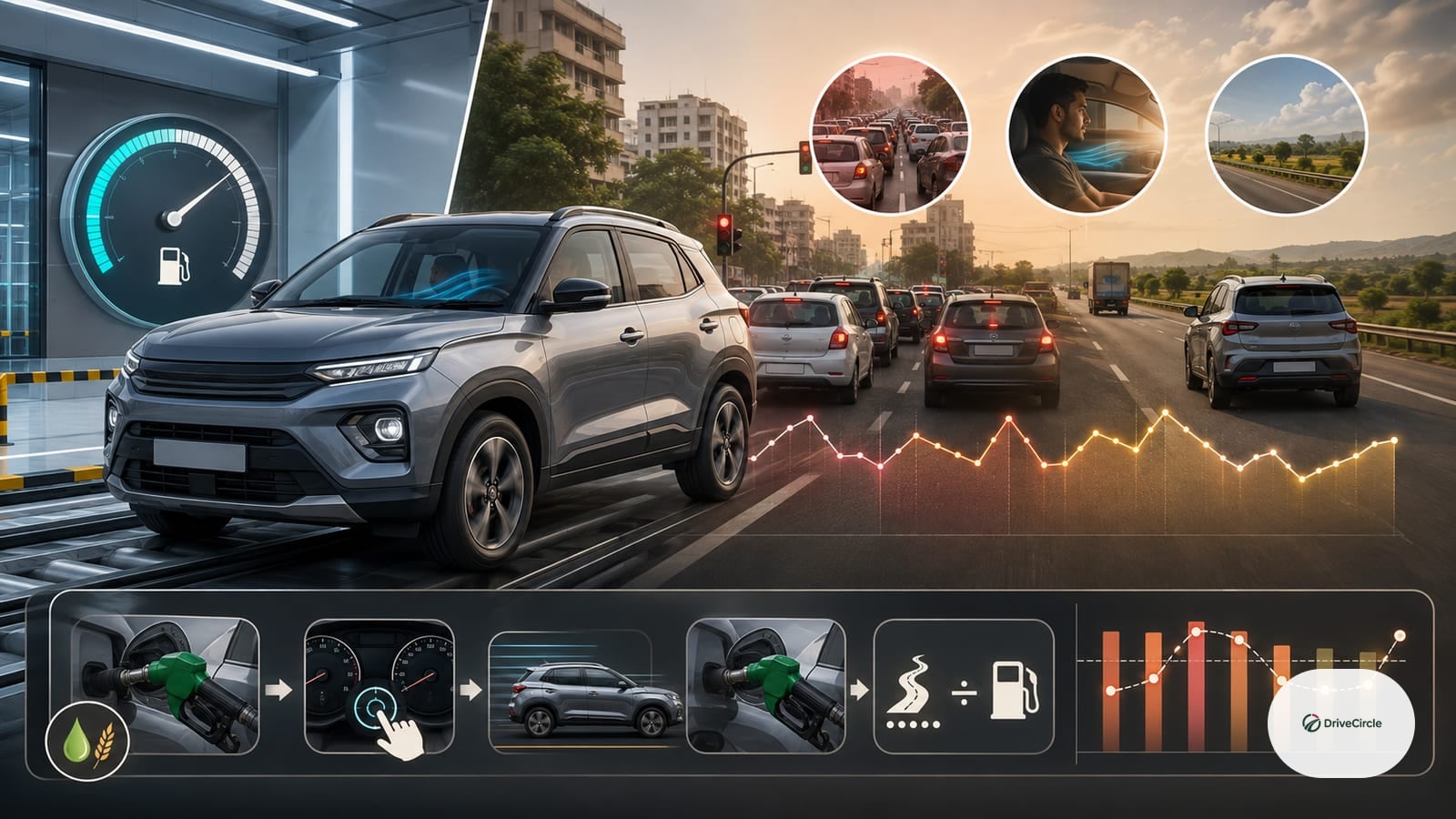
Every brochure lists a mileage figure, and almost no owner matches it in daily driving. That gap is not a defect — it is the difference between a lab test cycle and real Indian roads: traffic signals, AC load, short trips that never let the engine warm up, and driving style all pull the number down.
Owners who track their own numbers report a wide, honest range. Automatics in heavy city traffic can see figures as low as 5-9 km/l depending on fuel type and traffic density, climbing to 11-13 km/l on the highway. Manual transmissions consistently report better mileage than automatics on the same engine, sometimes by a meaningful margin. And the number itself moves over the car's life — several owners noted mileage dipping right after the first service, before settling as the engine runs in over the first few thousand kilometres.
Ethanol-blended fuel (E20) is a newer variable owners are actively discussing: multiple independent reports describe a real mileage drop after switching to E20 fuel, in some cases losing several km/l on the same route compared to before. A few owners noted better results at certain fuel retailers, though this varies enough to be worth testing for your own car rather than assuming.
How to Measure Your Own Mileage Honestly
- Zero your trip meter at a full tank, drive until you're near empty, then refill to full again.
- Divide the distance covered by the litres it took to refill — not by the dashboard's computed average, which can smooth over real dips.
- Track separately for city and highway stretches if your driving is a mix of both.
- Expect the number to change over the car's first few thousand kilometres as it runs in.
- If mileage drops noticeably after a fuel-type change, log a few tanks before concluding it's a real trend rather than one bad tank.
A mileage number only means something once it's yours — logged over real fills, not read off a brochure. That is exactly the kind of running number DriveCircle keeps for you automatically, fill after fill.