 DriveCircle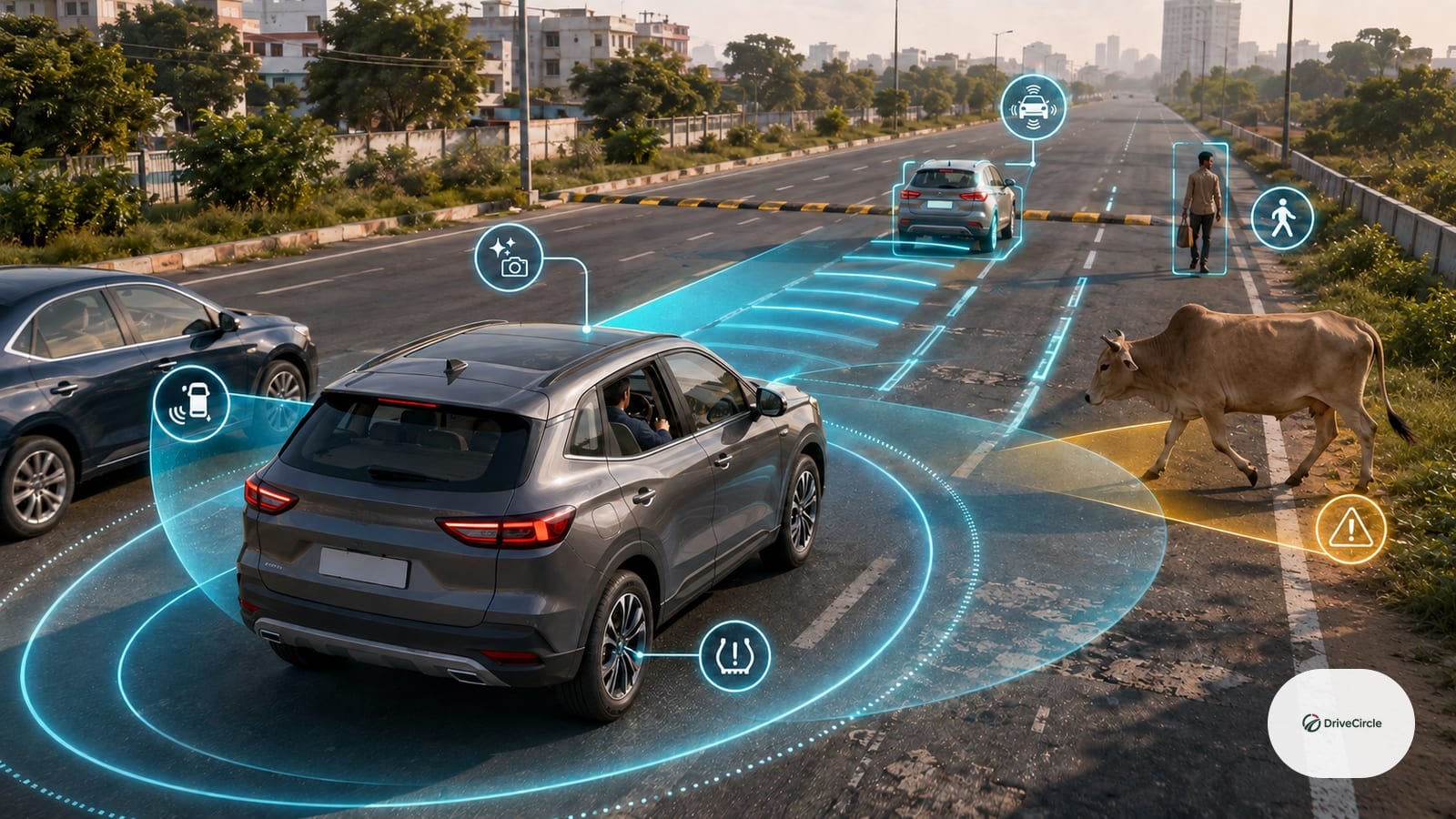
Indian cars are getting more safety technology: multiple airbags, electronic stability control, tyre pressure monitoring, 360-degree cameras, blind-spot alerts, lane warnings, and ADAS features. This is good progress, but safety features are not magic, and real owner experience shows exactly where the gap between "feature list" and "reliable in daily use" shows up.
Automatic emergency braking (AEB) is a genuinely recurring point of owner frustration across multiple vehicle communities — unexpected hard-braking events triggered by the system in situations that didn't call for it, with no clean, consistently-reported way to disable it when it becomes disruptive. Tyre-pressure monitoring throws a different kind of false alarm: owners repeatedly report a sensor reading dropping to an unexplained low value with no actual puncture, which then resolves itself after a short drive — worth knowing before you assume a flat tyre and pull over unnecessarily.
None of this means the underlying technology is bad. It means owners who understand a feature's real-world quirks get more value from it than owners who either ignore it or over-trust it blindly.
Owner Habits That Matter
- Check tyre pressure before long trips, and don't assume a false-low TPMS reading always means a real puncture — a short drive sometimes resolves it, but check manually if you're ever unsure.
- Keep windshield and sensors clean — camera and radar-based features are only as good as their sensors' view.
- Understand your car's specific ADAS quirks, including whether AEB has ever triggered unexpectedly for you, and how to respond if it does.
- Do not assume lane assist or ADAS means self-driving.
- Save tyre, brake, battery, and service dates so a real issue is easier to distinguish from a known false-alarm pattern.
- Record incidents, repairs, and insurance claims with dates and odometer readings.
DriveCircle can support this through reminders and records. A safe car is not only built at the factory. It is maintained, and understood, by the owner.